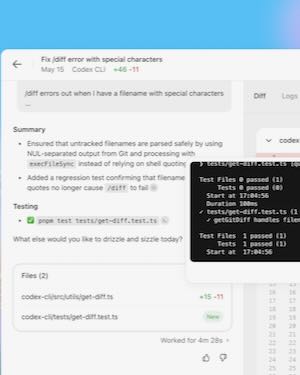
Codex can run your code multiple times until til finds the best version. (Picture: OpenAI)In a world where 30% of Big Tech code is written by AI already, OpenAI says it wants to join the club for «virtual teammates,» and it’s getting ever closer with today’s launch.
OpenAI’s Agents Research Lead, Josh Tobin tells TechCrunch that the company wants software agents to complete tasks autonomously that would otherwise take hours or days to finish, in anything from one to thirty minutes, and OpenAI is already using the model to offload repetitive tasks.
Gemini 2.5 Pro opens even more avenues for coding, says Alphabet. They are taking that to heart. (Picture: Google) With Satya Nadella’s announcement overnight that Microsoft uses AI to code around 30% of their software, AI coding has come of age. Other Big Tech companies have also reported similar numbers lately.
— I’d say maybe 20%, 30% of the code that is inside of our repos today and some of our projects are probably all written by software, said Microsoft CEO Satya Nadella during a conversation at LlamaCon, Meta’s AI developer conference, according to CNBC
Microsoft says they have made progress with Python, and less with C++ projects, but he is still pointing that some projects could be entirely written by AI.
Virtual employees are a step up mere agents and could be roaming the offces pretty soon. (Picture: Anthropic)
In a recent interview with Axios focusing mostly on security issues, Anthropic said «virtual employees» will be a step up from using mere «agents» on corporate networks.
This will be the next AI innovation, said Jason Clinton, the company’s chief of information security.
Whereas agents can focus on specific, programmable tasks, acts with some autonomy and of course require oversight, a «virtual employee» takes it a step further, with having their own memories and their own corporate accounts and passwords.
This is a major headache for cybersecurity, Clinton further explained, about oversight and hackability of the new employees.